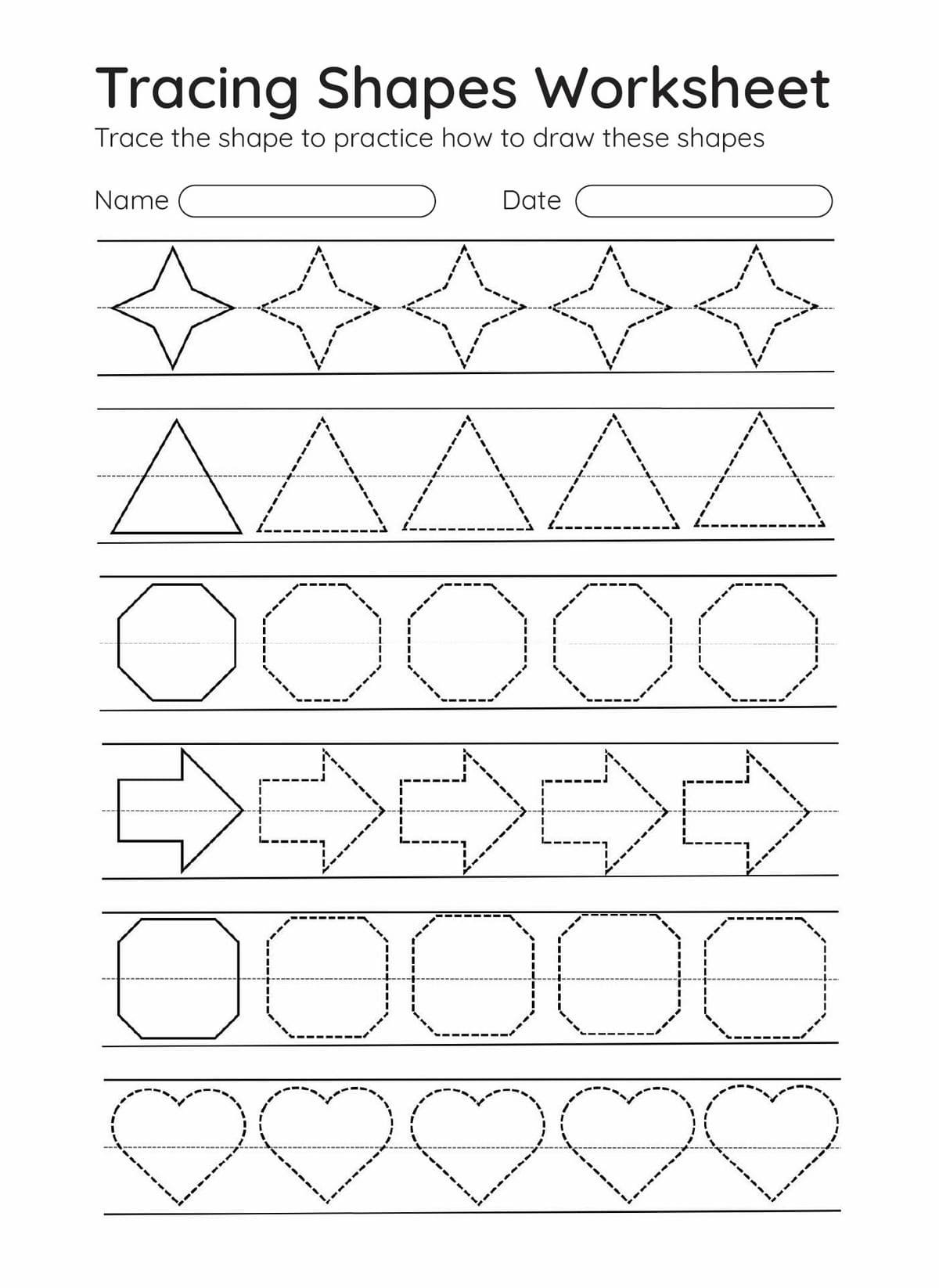
In a world increasingly shaped by individual needs and unique learning styles, the age-old tracing worksheet might seem like a relic. Yet, when reimagined through the lens of Customizing Tracing Worksheets for Personalized Learning, this humble tool transforms into a powerful catalyst, empowering every student to unlock their full potential at their own pace. Gone are the days of generic, one-size-fits-all practice; today, we can tailor learning experiences so precisely that each stroke of a pencil becomes a meaningful step forward, perfectly matched to a child’s specific stage and interests.
At a Glance: Why Personalized Tracing Matters
- Boosts Engagement: Tailored content (like tracing their own name or favorite animals) keeps learners interested and motivated.
- Targets Specific Skills: Focuses practice precisely where a student needs it most, from fine motor control to letter recognition.
- Accelerates Progress: By matching the challenge level, students build confidence and master skills more efficiently.
- Supports Diverse Learners: Ideal for varying ages, skill levels, and those with specific learning needs (e.g., in occupational therapy).
- Modern Accessibility: AI tools make creating custom worksheets faster and easier than ever before.
- Cost-Effective & Flexible: Many resources are free for educational use, offering endless variety without breaking the bank.
Beyond the Lines: The Transformative Power of Tailored Practice
Imagine a young child, just beginning their literacy journey, handed a worksheet filled with random words they've never encountered. Compare that to a worksheet featuring their own name, surrounded by images of their favorite cartoon characters. Which one do you think will spark more enthusiasm? The answer is obvious, and it lies at the heart of personalized learning.
Generic tracing worksheets often miss the mark because they assume a uniform readiness and interest level. But every learner is unique. Some might struggle with basic lines, while others are ready for complex sentences. Some are captivated by animals, while others prefer space themes. Customization bridges this gap, turning a passive exercise into an active, engaging adventure. It's about meeting the learner where they are, acknowledging their individuality, and leveraging their interests to fuel their desire to learn. This approach isn't just about better results; it's about fostering a love for learning that lasts a lifetime.
The Foundational Skills Tracing Builds: More Than Just Handwriting
While tracing is undeniably a cornerstone for developing neat handwriting, its benefits extend far beyond the formation of letters and numbers. It's a fundamental activity that underpins several critical developmental skills, preparing children for a host of academic and practical tasks.
Think about the intricate process involved in accurately following a dotted line. It requires:
- Refined Fine Motor Skills: The tiny muscles in the hands and fingers get a precise workout, developing the dexterity needed for holding a pencil, buttoning a shirt, or using scissors. This subtle strengthening is vital.
- Improved Hand-Eye Coordination: The eyes must track the dots, while the hand must execute the movement. This synchronized effort hones the connection between visual input and motor output, a skill essential for everything from reading to sports.
- Building Muscle Memory: Repetitive tracing of specific shapes, letters, or numbers helps the brain and hands "remember" the correct formation, making future writing more automatic and less effortful.
- Enhanced Concentration and Spatial Awareness: Tracing demands sustained focus. Children learn to pay attention to detail, understand the boundaries of the lines, and perceive how shapes and letters fit within a given space. This spatial reasoning is crucial for geometry, art, and even navigating their environment.
As Pixelcut.ai emphasizes, tracing activities are vital preparation for formal handwriting, laying down the neural pathways and physical strength necessary for fluent, legible communication. By personalizing these exercises, you ensure that the skills being built are directly relevant and appropriately challenging for the individual student, maximizing their developmental impact.
What Can You Personalize? A Universe of Learning Options
The beauty of customized tracing worksheets lies in their infinite adaptability. Whatever your child needs to practice, whatever captures their imagination, you can likely create a worksheet for it. Let's explore the vast array of possibilities, drawing from both traditional methods and modern AI tools.
Content That Connects
The most impactful customization often starts with the content itself. Instead of generic exercises, think about what genuinely resonates with your learner:
- Names & Personal Details: This is often the first and most engaging step. Imagine a child beaming as they trace their own name, like "Sophia" embellished with hearts and stars, or practicing the names of family members such as "Jessica Hamil," "Abby Mullins," "Johnson," "Sophie Patel," "Mason Lee," and "Lily Brown." This personal connection instantly makes the task more relevant and exciting. A dedicated Name Tracing Generator can make this particular customization incredibly simple and effective.
- Numbers & Counting: From "1-10 with cute animal pictures" to larger number words, you can tailor number practice to specific ranges or even incorporate simple math concepts.
- Alphabet Mastery: Practice individual letters (like "letter A," "B," "S," "W," "Q"), work through the uppercase alphabet, or focus on specific sections like "A-L" or "A-M with images." You can also integrate both uppercase and lowercase letters side-by-side.
- Words & Sentences: Move beyond single letters to tracing full words like "Daddy" or "banana," then progress to short sentences. You can even bring stories to life by tracing dotted text from familiar tales like "Town Mouse and Country Mouse."
- Thematic Vocabulary: Create worksheets for specific categories like "tracing fruit names" or words related to a science unit.
Themes That Engage
Learning should be fun, and themes are a fantastic way to inject excitement into practice. Pixelcut.ai's generator highlights the power of incorporating interests:
- Animals: A perennially popular choice, you can create worksheets with a "cute animal pictures" theme for numbers or letters, or even design "3 quick ways to make animal-themed tracing worksheets in 5 minutes" using traditional methods.
- Space Exploration: Rockets, planets, and stars can make tracing feel like an interstellar adventure.
- Seasonal & Holiday Themes: Imagine tracing "Happy Halloween" or practicing winter-themed words.
- Shapes & Patterns: Beyond letters, tracing geometric shapes can enhance spatial awareness and prepare for drawing. You can even combine "tracing and coloring geometric shapes" for added engagement.
Format & Difficulty: Tailoring the Challenge
Customization also extends to the physical presentation and the level of difficulty, ensuring the worksheet is just right for the learner's current skill set:
- Line Types: Start with simple "drawing lines"—straight, curved, or zig-zag—to build basic motor control. Activities like "Start Your Engines" for line tracing can make this foundational step more playful.
- Writing Styles: Offer practice in both "cursive and print writing" as children advance.
- Visual Cues: For traditional methods, tutorials on worksheets.clipart-library.com suggest using "blue and red lines" in Microsoft Word, which can help children understand starting and stopping points for letter formation.
- Complexity Progression: Begin with individual letters or words, then gradually introduce longer phrases, sentences, or even paragraphs as handwriting skills improve.
By thoughtfully selecting and combining these elements, you move from mere tracing to a dynamic, personalized learning experience that truly empowers the student.
The Old Way vs. The New Way: Crafting Your Own Worksheets
Creating custom tracing worksheets used to be a somewhat involved process, demanding a bit of design savvy and patience. Today, technology has dramatically simplified the journey, offering both traditional DIY routes and lightning-fast AI-powered solutions.
Traditional Methods: The Hands-On DIY Approach
Before AI, many educators and parents turned to familiar software to design their own materials. These methods offer complete control but require more time and effort:
- Microsoft Word: As described by worksheets.clipart-library.com, Word is a versatile tool. You can:
- Insert Dotted Fonts: Many free dotted or dashed fonts are available online that mimic tracing lines. Simply type your desired text, select the font, and adjust the size.
- Use Text Boxes & Shapes: Create lines or shapes with dotted outlines.
- Incorporate Color-Coded Cues: Tutorials often suggest using "blue and red lines" to indicate starting and stopping points for letters, a clever visual aid.
- Add Images: Insert simple clipart (ensuring educational, non-commercial use as per clipart-library.com's guidelines) to make worksheets more appealing.
- PowerPoint & Word Combination: For more complex layouts or integrating different elements, PowerPoint can be used for design, then exported or copied into Word for final formatting and printing. This allows for more graphic design flexibility.
- Quick Animal Themes: For simple, repetitive designs, you can create basic animal outlines and add dotted lines or letters, often achievable "in 5 minutes" with practice.
Pros of Traditional Methods: Full creative control, no internet needed once software is installed, cost-effective if you already own the software.
Cons of Traditional Methods: Time-consuming, requires some design skills or font hunting, can be tedious for creating many variations.
The AI-Powered Revolution: Instant Customization
Enter the age of artificial intelligence, and suddenly, personalized worksheet creation becomes incredibly simple and fast. Tools like Pixelcut.ai's AI Tracing Worksheet Generator exemplify this shift:
- Effortless Creation: The process is straightforward: "describe the desired worksheet in a prompt." This means you don't need to hunt for fonts, draw lines, or design layouts. You simply tell the AI what you want.
- Instant Results: Click "generate," and "have the AI create it in seconds." This speed is a game-changer for busy parents or teachers needing materials on the fly.
- Full Customizability via Prompts: Want "A worksheet to trace the numbers 1-10 with cute animal pictures"? Just type it. Need to trace "Sophia with hearts and stars"? The AI handles it. This level of customization through natural language is revolutionary.
- High-Resolution Output: The generator provides a "high-resolution image" or "printable PDFs," ensuring clear, crisp worksheets ready for immediate use.
- No Design Skills Needed: This is a huge advantage. You don't need to be a graphic designer to create professional-looking, personalized materials.
- Endless Variety: Since you're only limited by your imagination and prompts, you can continuously create new and engaging content with "different themes, characters, shapes, words, lines (curved/straight), simple pictures, or short sentences."
Pros of AI Generators: Incredibly fast, extremely easy to use, no design skills required, generates endless variety, high-quality output.
Cons of AI Generators: Requires internet access, output is dependent on prompt quality, less granular control over specific design elements compared to manual methods.
For those prioritizing speed, ease, and endless variety, AI generators are a clear winner. However, traditional methods still hold value for specific, highly customized projects or when offline creation is necessary. Many educators now embrace a hybrid approach, using AI for quick, broad personalization and traditional tools for fine-tuning specific elements.
Who Benefits Most from Customized Tracing Worksheets?
The beauty of personalized tracing is its broad applicability. It’s a tool that supports a wide spectrum of learners and educators, adapting to almost any need.
- Parents: At home, parents can create tailor-made worksheets that directly address their child’s current learning goals and interests. Whether it’s helping a preschooler with "Sophia's" name tracing, practicing the alphabet, or mastering numbers, personalized sheets make learning a natural extension of playtime.
- Teachers: In the classroom, teachers can efficiently generate customized worksheets for individual students or small groups. This allows for differentiated instruction, addressing specific learning gaps or providing enrichment activities for advanced learners, without hours of prep time.
- Homeschoolers: Supplementing a curriculum with highly relevant and engaging tracing activities can significantly enhance learning outcomes. Homeschoolers can easily match worksheets to current topics, themes, or historical figures being studied.
- Occupational Therapists: For children needing to develop fine motor skills, hand-eye coordination, or muscle memory due to developmental delays or injuries, custom tracing worksheets are invaluable. Therapists can design exercises precisely to target specific areas of development, making therapy more engaging and effective.
- Students with Unique Learning Needs:
- Children with Dyslexia or Dysgraphia: Tracing can help reinforce letter formation and visual-motor integration in a low-pressure way. Customization allows focusing on problematic letters or patterns.
- Early Learners/Preschoolers: Building foundational skills like pre-writing lines, simple shapes, and basic letter recognition.
- English Language Learners (ELLs): Practicing the names of familiar objects, family members, or basic vocabulary words in English.
- Students Needing Extra Practice: For those who just need more repetition to solidify a concept, customized worksheets prevent boredom by varying themes and content.
- Advanced Learners: Offering more complex tracing, like long sentences or intricate patterns, to challenge and keep them engaged.
The core principle remains: when the learning material is designed specifically for the individual, it resonates more deeply, leading to greater motivation and more profound learning.
Best Practices for Designing & Using Personalized Worksheets
Creating a customized tracing worksheet is only half the battle; using it effectively is where the real magic happens. Here are some best practices to ensure your personalized learning efforts yield maximum benefits:
- Know Your Learner Inside and Out: This is paramount. What are their current interests? What makes them laugh? What specific skill are they struggling with or excelling at? Use this knowledge to inform your choices of themes, characters, words, and difficulty. If they love dinosaurs, make it a dinosaur-themed worksheet!
- Start Simple and Build Complexity Gradually: Don't overwhelm a beginner with long sentences. Begin with basic lines, then move to individual letters, short words, and finally, simple sentences. Each success builds confidence for the next step.
- Incorporate Fun and Engagement: Learning shouldn't be a chore. Use bright colors, appealing themes (animals, space, favorite characters), and even incorporate elements they can color after tracing. The more enjoyable the activity, the more they'll want to do it.
- Provide Clear Instructions and Guidance: Before they start, clearly explain what they need to do. For younger children, demonstrate the tracing motion. Offer verbal cues, and for traditional methods, remember the benefit of "blue and red lines" to guide starting and stopping points.
- Encourage and Provide Positive Reinforcement: Focus on effort, not just perfection. Acknowledge their hard work and progress. "Great job trying your best!" or "Look how much smoother your lines are getting!" goes a long way.
- Mix It Up for Variety: Don't just stick to letter tracing. Rotate through tracing numbers, shapes, short words, names, or even simple pictures. This keeps the activity fresh and ensures a broader range of skills are being developed.
- Prioritize Quality Output: Whether you're printing from Microsoft Word or an AI generator, ensure the print quality is high-resolution. Faded or pixelated lines can be frustrating and counterproductive. Crisp, clear lines are easier to follow and create a more satisfying experience.
- Integrate Tracing into a Broader Learning Plan: Tracing is a foundational tool, not the sole solution. Combine it with other activities like drawing, storytelling, reading aloud, and hands-on learning to create a rich educational environment.
Avoiding Common Pitfalls in Personalized Tracing
While customization offers immense advantages, there are a few traps to avoid that can diminish its effectiveness:
- Overwhelming Complexity: Too many elements on one page, or too difficult a task for the learner's current stage, can lead to frustration and disengagement. Keep it focused and manageable.
- Lack of Engaging Content: Just because it's custom doesn't mean it's automatically interesting. Ensure the themes, words, or images chosen genuinely appeal to the child.
- Poor Print Quality: As mentioned, blurry or faint lines are frustrating. Always use a printer with sufficient ink and ensure the generated file is high-resolution before printing.
- Ignoring Progress: Don't just churn out the same worksheet repeatedly. Observe your child's progress. Are they mastering letter 'A'? Then it's time to move to 'B' or incorporate 'A' into a word. Stale content leads to boredom.
- Commercial Misuse of Free Resources: Remember the strict guidelines from sources like worksheets.clipart-library.com: materials are "free solely for educational use." Avoid "selling, reselling, sublicensing, or redistributing for profit" any resources obtained from such sites. Respect intellectual property.
- Over-reliance on Tracing: While beneficial, tracing is a stepping stone. Ensure there are opportunities for freehand writing, drawing, and creative expression to complement the structured practice.
Your Questions, Answered
How often should my child use tracing worksheets?
It depends on the child's age, skill level, and attention span. For young children (3-5 years), short, focused sessions of 5-10 minutes a few times a week are often more effective than long, infrequent ones. For older children who enjoy it or need specific practice, you might extend sessions, but always look for signs of fatigue or disengagement. Quality over quantity is key.
Can tracing worksheets help with cursive writing?
Absolutely! Many platforms, including worksheets.clipart-library.com, offer specific "practicing cursive" options. Tracing cursive letters and words helps children learn the unique flow, connections, and forms required for this writing style, building the muscle memory necessary for fluent cursive handwriting.
Are digital tracing apps as effective as printable worksheets?
Both digital apps and printable worksheets have their merits. Digital apps can be highly interactive, offer instant feedback, and reduce paper waste. However, printable worksheets offer a tactile experience with a real pencil and paper, which is crucial for developing proper pencil grip, pressure control, and the physical muscle memory needed for traditional handwriting. A combination of both can be highly effective.
What age is appropriate for tracing activities?
Children can begin pre-writing activities like tracing lines and simple shapes as early as 2-3 years old, often using their fingers in sand or playdough first. Formal letter and number tracing usually begins around 3-5 years, depending on their fine motor development and interest. It continues to be beneficial into early elementary school for refining handwriting and reinforcing new concepts.
Empowering the Journey: Your Next Steps in Personalized Learning
The journey of education is never a one-way street, and the power of customizing tracing worksheets for personalized learning truly underscores this truth. We've moved from a paradigm where students adapt to the material, to one where the material adapts to the student. This subtle shift is monumental, fostering a generation of learners who are more engaged, more confident, and ultimately, more prepared to tackle the complexities of the world around them.
So, whether you're a parent seeking to ignite a spark in your child, a teacher striving for differentiated instruction, or a therapist supporting developmental milestones, the tools and knowledge are now at your fingertips. Take the next step: experiment with an AI generator, revisit traditional DIY methods, or simply start observing your learner's interests more closely. Observe, adapt, and revel in the powerful impact of learning experiences crafted just for them. The future of education is personal, and it's remarkably within reach.