Every parent dreams of seeing their child confidently write their name, a monumental milestone that marks the beginning of their literacy journey. But how do we get them there? For early writers, the answer often starts with a simple yet profoundly effective activity: name tracing. This isn't just a rote exercise; it’s a powerful foundational step that weaves together fine motor development, letter recognition, and a blossoming sense of self.
At a Glance: Why Name Tracing Matters
- Boosts Fine Motor Skills: Refines hand-eye coordination, grip, and control, essential for all writing.
- Enhances Letter Recognition: Familiarizes children with the shapes and forms of letters, kickstarting reading.
- Builds Memory Retention: Repetitive practice helps children remember letters and how they connect.
- Develops Pre-Writing Skills: Lays the groundwork for forming letters independently.
- Supports Language Development: Introduces letter patterns and phonetic sounds, enriching vocabulary.
- Fosters Confidence: Successfully writing their name gives a huge boost to self-esteem and motivation.
- Personalizes Learning: Connecting with their own name makes learning relevant and engaging.
- Creates Quality Connection Time: Offers a focused, positive interaction opportunity for parents and children.
The Power of a Name: More Than Just Letters
Imagine the pride in a child's eyes as they see their own name, carefully printed, ready for them to trace. Name tracing activities, at their heart, are about guiding children to draw over the characters of their own name. It's a fundamental tool in early childhood development, aiming to help children not only recognize and write their names but also to enhance letter recognition, build crucial fine motor skills, and cultivate a strong sense of identity.
This practice isn't new. It has a rich tradition in early education, evolving significantly in the 20th century to emphasize personalized learning. Educators recognized that a child’s name is often the first word they truly "own," making it an incredibly powerful and personal entry point into the world of literacy.
Why Tracing Your Name is a Game-Changer
The benefits of name tracing extend far beyond simply learning to write "their name." It's a holistic activity that supports multiple areas of development, preparing children for school and life itself.
Refining Hand-Eye Coordination: Fine Motor Skills
Think about all the tiny, precise movements involved in writing. Name tracing is a fantastic workout for those small hand muscles. It directly improves hand-eye coordination, dexterity, grip, and control over writing instruments. These aren't just writing skills; they're life skills. From tying shoelaces and buttoning shirts to using utensils and drawing, these refined motor skills are crucial for countless daily activities. Consistent tracing helps little hands gain the strength and precision needed for more complex tasks down the line.
Building the Alphabet Foundation: Letter Recognition
Before children can read fluently, they need to know their letters. Name tracing acts as a direct introduction to letter shapes and forms, making children intimately familiar with the visual characteristics of each character. This repeated exposure helps them identify letters quickly, differentiate between similar-looking ones (like 'b' and 'd'), and even begin to associate letters with their sounds. This direct familiarization is essential for understanding written words and developing early reading readiness.
Etching Knowledge: Memory Retention
Repetition is a cornerstone of learning, and name tracing leverages it beautifully. Each time a child traces a letter in their name, they reinforce its shape and sequence in their memory. This repetitive action aids in recalling letters and understanding how they connect to form words, building a robust foundation for more complex literacy tasks. The more they trace, the stronger those neural pathways become, making recall more automatic and effortless.
The First Strokes: Mark Making
Name tracing is a prime example of "mark making," a critical pre-writing skill. It encourages children to follow lines, curves, and specific pathways, which directly prepares them for forming letters independently. This controlled mark making helps them understand spatial relationships on a page, the directionality of writing (left to right, top to bottom), and the motor planning required for fluent handwriting.
Speaking & Understanding: Language Skills
While often seen as a writing activity, name tracing also contributes significantly to language development. When combined with verbal discussion – for instance, saying the letter sounds as they trace, or talking about words that start with those letters – it helps children understand language structure, recognize letter patterns, and develop phonetic awareness. This integrated approach builds vocabulary and comprehension, making the connection between spoken and written language more explicit.
A Boost to the Ego: Confidence & Self-Esteem
There’s a unique joy and pride that comes with successfully writing your own name. For young children, achieving this provides an immense sense of accomplishment. This boosted self-esteem isn't just fleeting; it motivates continued learning and eases the often-anxious transition into formal schooling, where self-identification is a frequent task. It tells them, "I can do this!"
Making it Their Own: Personalized Learning
Engaging with their own name makes the learning process inherently relevant and personal. It’s not just abstract letters; it’s their letters, their identity. This personalized approach fosters a strong sense of self and belonging, making children more invested and excited about learning. When the content resonates personally, engagement skyrockets.
Connecting Through Learning: Quality Parent-Child Time
Name tracing provides a wonderful opportunity for focused one-to-one interaction. Sitting together, guiding little hands, and offering encouragement strengthens parent-child bonds and promotes a positive attitude towards learning. These moments of shared achievement and gentle guidance build a foundation of trust and a love for discovery that extends far beyond the tracing activity itself.
Bringing Names to Life: Creative Tracing Activities
Name tracing doesn't have to be limited to paper and pencil. Integrating varied, engaging activities keeps children motivated and makes learning fun.
At Home, Indoors
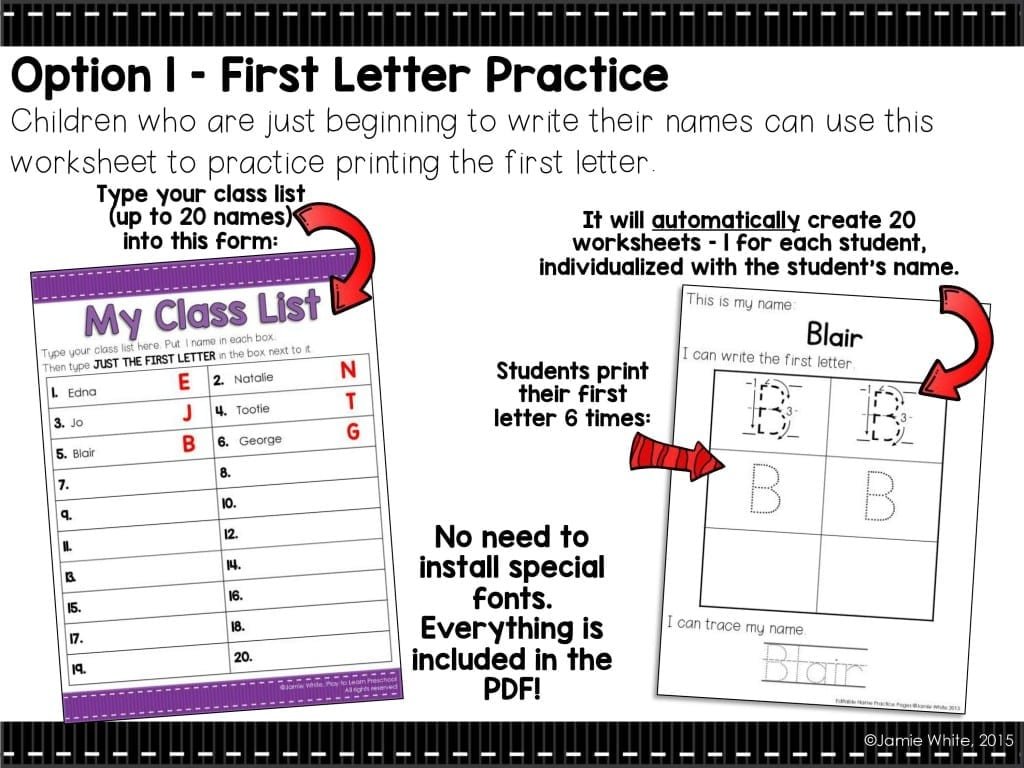
- Personalized Worksheets: Easily create or print customized tracing sheets. Many online tools can help you generate name tracing worksheets quickly and effectively.
- Letter Tiles or Magnets: Arrange letters of their name, then trace around them with a finger.
- Sensory Tracing: Spread sand, rice, flour, or shaving cream on a tray and have them trace their name with their finger. The tactile experience enhances memory.
Outdoor Explorations
- Sidewalk Chalk: Take the learning outside! Write their name large with chalk and let them trace over it.
- Nature’s Letters: Organize a scavenger hunt for letter-shaped sticks, leaves, or stones, then use them to form and trace their name.
- Water Painting: Give them a paintbrush and a cup of water, and let them "paint" their name on a dry pavement or wall.
Crafting Creativity
- Decorate Name Posters: Trace their name, then let them decorate the letters with stickers, glitter, yarn, or torn paper.
- Name Banners: Create individual letter cards, trace the letters, then string them together to make a personalized banner for their room.
Sensory Science & Culinary Fun
- Letter-Shaped Biscuits: Use letter cookie cutters to create name biscuits, then decorate them with icing.
- Edible Tracing: Write names with edible markers on plain cookies or toast, then let them trace.
- Paintbrush & Water: Simple and mess-free. Trace names with a wet paintbrush on a dark surface like construction paper, watching the water evaporate.
Crafting the Perfect Tracing Experience
To maximize the benefits, thoughtful design and the right tools are key.
The Right Tools for Tiny Hands
- Materials Matter: Opt for high-quality, sturdy paper like thicker sheets or tracing paper. This prevents tearing and provides a more satisfying writing surface.
- Age-Appropriate Implements: Start with large, easy-to-grip markers or chunky crayons, which are less frustrating for developing hands. As their fine motor skills improve, introduce pencils. Balance vivid colors with erasable options for practice.
Embracing the Digital Age
Interactive apps like ABC Mouse, Endless Alphabet, and Write It! offer dynamic, engaging experiences. These digital tools often provide instant feedback, customization options (like tracing specific letters), and progress tracking, making learning feel like a game. They can be a fantastic supplement to traditional methods.
Beyond the Basics: Variations & Multisensory Magic
- Uppercase and Lowercase: Introduce tracing for both uppercase and lowercase letters to ensure comprehensive letter distinction. Children will encounter both forms in their environment.
- Colors and Textures: Integrate colors strategically (e.g., a different color for each letter, or tracing in their favorite color) to enhance engagement. Experiment with textured materials like sandpaper letters or tracing on fabric to provide a rich multisensory experience that aids retention. Use colors to highlight, not to overwhelm or distract.
Making it Uniquely Theirs: Customization
Personalization keeps children motivated. Create custom tracing sheets that feature their name alongside their favorite characters, animals, or thematic content. Vary the formats — dotted lines, solid lines, or different fonts — to prevent monotony and challenge them in new ways. Seeing their name in varied contexts reinforces its identity.
Making Tracing a Habit: Implementation Strategies
Consistency and an integrated approach are crucial for success, whether at home or in an educational setting.
At Home, Seamlessly
- Consistent Routine: Establish a short, focused tracing routine daily – perhaps 5-10 minutes. Choose a dedicated, distraction-free space.
- Integrate Through Play: Turn tracing into a game. Use sticker reward systems for completed names or tactile tracing using everyday objects like sand, rice, or flour for a fun, sensory twist.
- Lead by Example: Show enthusiasm and participate with them occasionally, demonstrating the joy of learning.
In the Classroom, Collaboratively
- Curriculum Integration: Weave name tracing into various subjects. Use it as part of language arts, art projects, or even social studies when discussing families.
- Daily Routines: Make it a regular part of morning work, circle time, or transition activities.
- Interactive Name Charts: Display a chart with each child's name, allowing them to trace their name with their finger before starting the day.
- Peer Learning: Encourage children to "teach" each other, fostering collaboration and strengthening their own understanding.
Tech-Savvy Learning: Digital Integration
- Tablets and Smartboards: Leverage touch screens for multisensory learning. Dynamic visuals and interactive elements can make tracing exciting.
- Collaborative Group Activities: Use smartboards for group tracing games, where children take turns tracing parts of names.
- Accessible Self-Paced Practice: Tablets allow children to practice at their own pace, replaying sections as needed, receiving instant feedback without pressure.
Navigating the Bumps: Common Challenges & Solutions
Even with the best intentions, bumps can appear. Anticipating and addressing them helps keep the learning journey smooth.
Pitfalls to Sidestep
- Lack of Consistency: Sporadic practice yields slow progress. Solution: Ensure frequent, even if short, daily practice sessions.
- Wrong Materials: Using flimsy paper or too-small pencils can frustrate children. Solution: Always use age-appropriate tools like chunky crayons or large markers and sturdy paper.
- Ignoring Individual Learning Styles: Not all children learn the same way. Solution: Observe your child's preferences. Do they respond to visual cues, auditory instructions, or hands-on tactile experiences? Tailor activities accordingly.
- Overlooking Progress Tracking: Without tracking, it's hard to see improvement, which can demotivate both child and parent. Solution: Maintain a simple progress chart or keep samples of their work.
Taming the Wiggles: Addressing Short Attention Spans
It's natural for young children to have limited attention spans. Here's how to keep them engaged:
- Short Bursts: Break tasks into shorter, manageable chunks, perhaps 5-10 minutes at a time. It’s better to have frequent, short, positive sessions than one long, frustrating one.
- Movement & Variety: Incorporate movement or change environments. Move from paper to a chalkboard, or try tracing in sand, then back to a worksheet.
- Use Timers: A visual timer can create a sense of urgency and challenge, making the activity feel like a fun race against time.
- Positive Reinforcement: Lavishly praise all achievements, no matter how small. Focus on effort and progress, not just perfection. Acknowledge their focus and willingness to try.
Watching Them Grow: Measuring Progress & Giving Feedback
Tracking progress and providing constructive feedback are vital for sustained learning and motivation.
How to Spot Improvements
- Compare Over Time: Keep dated samples of their tracing work. Look for improvements in letter formation, spacing between letters, overall neatness, and even speed.
- Varied Assessments: Periodically conduct quizzes or activities where they trace their name using different tools (e.g., crayon one day, marker another) or on different surfaces to assess adaptability.
- Observation: Simply observe their confidence and independence. Can they now identify the letters in their name more quickly? Do they attempt to write parts of it on their own?
The Art of Encouragement: Effective Feedback
- Positive Reinforcement: Always acknowledge even small improvements. Be specific with your praise: "Wow, your 'A' is so smooth today!" or "I love how carefully you traced the curve of the 'S'."
- Goal Setting: Establish clear, achievable, and visible goals together. For example, "Let's focus on making our 'M' reach the top line today."
- Progress Charts: Utilize visible charts with stickers, ticks, or small drawings to track achievements. Children love seeing their progress visually, and it serves as a powerful motivator. Celebrate milestones!
The Future of First Words
As technology advances and our understanding of early childhood development deepens, name tracing will continue to evolve. We can expect even greater integration of interactive apps, tablets, and smartboards, offering increasingly engaging digital tracing formats with adaptive learning capabilities. Ongoing research will explore the long-term impacts of various name tracing methods on literacy outcomes, helping us refine best practices. Moreover, there's a growing emphasis on inclusivity, expanding activities to incorporate diverse languages and names, promoting cultural understanding right from a child's very first written word.
Empowering the Journey of Early Literacy
Name tracing is far more than just a simple pre-writing exercise. It's a foundational pillar supporting a child's entire early literacy journey, carefully building critical fine motor skills, solidifying letter recognition, fostering confidence, and personalizing the learning experience. By embracing creative activities, using appropriate tools, and providing consistent, positive guidance, you can transform this fundamental skill into a joyful and empowering experience. You're not just teaching a child to write their name; you're opening the door to a world of reading, writing, and self-expression.